
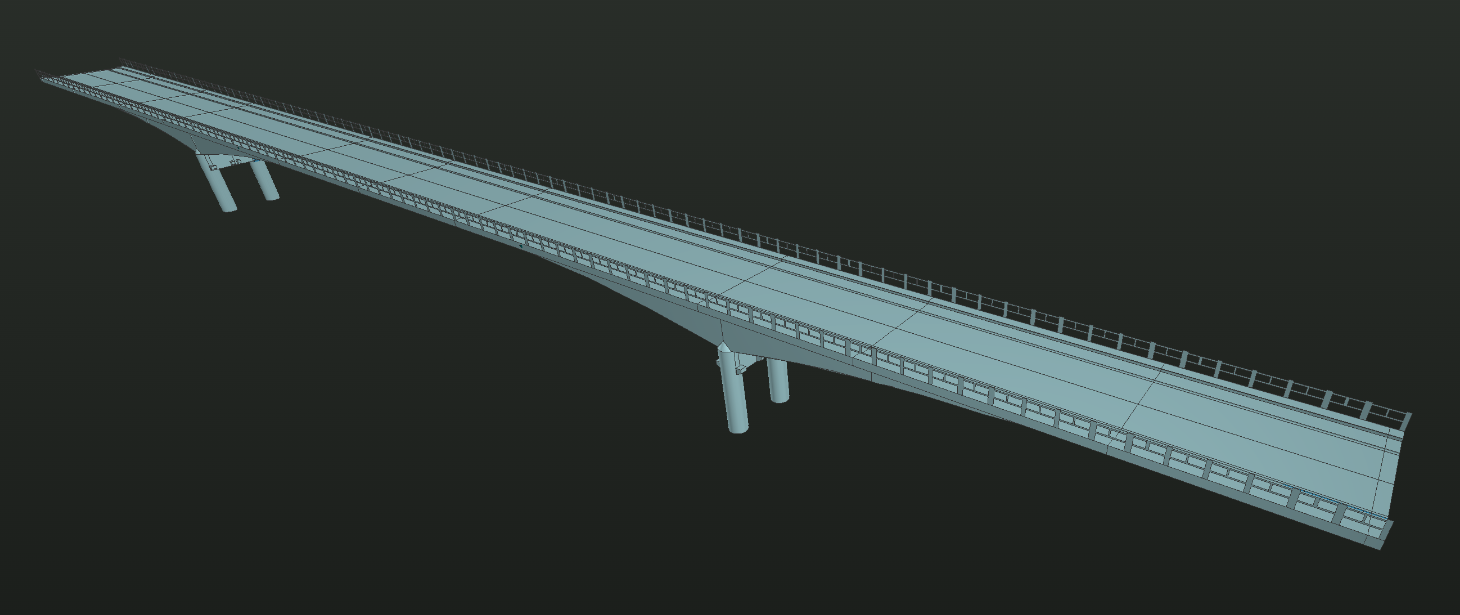
In a pilot project carried out with DNIT, PhDsoft applied the Web Digital Twin to structural integrity management for an in-service road bridge. The work brought together information from four complementary sources in a single digital environment, linking evidence to the structure model and its history to support engineering assessment.
The challenge of bringing different evidence together
Assessing a bridge involves information produced by different methods, at different times and scales. The pilot aimed to bring this evidence together in the context of the same asset and make its combined interpretation useful for integrity management.
- Satellite
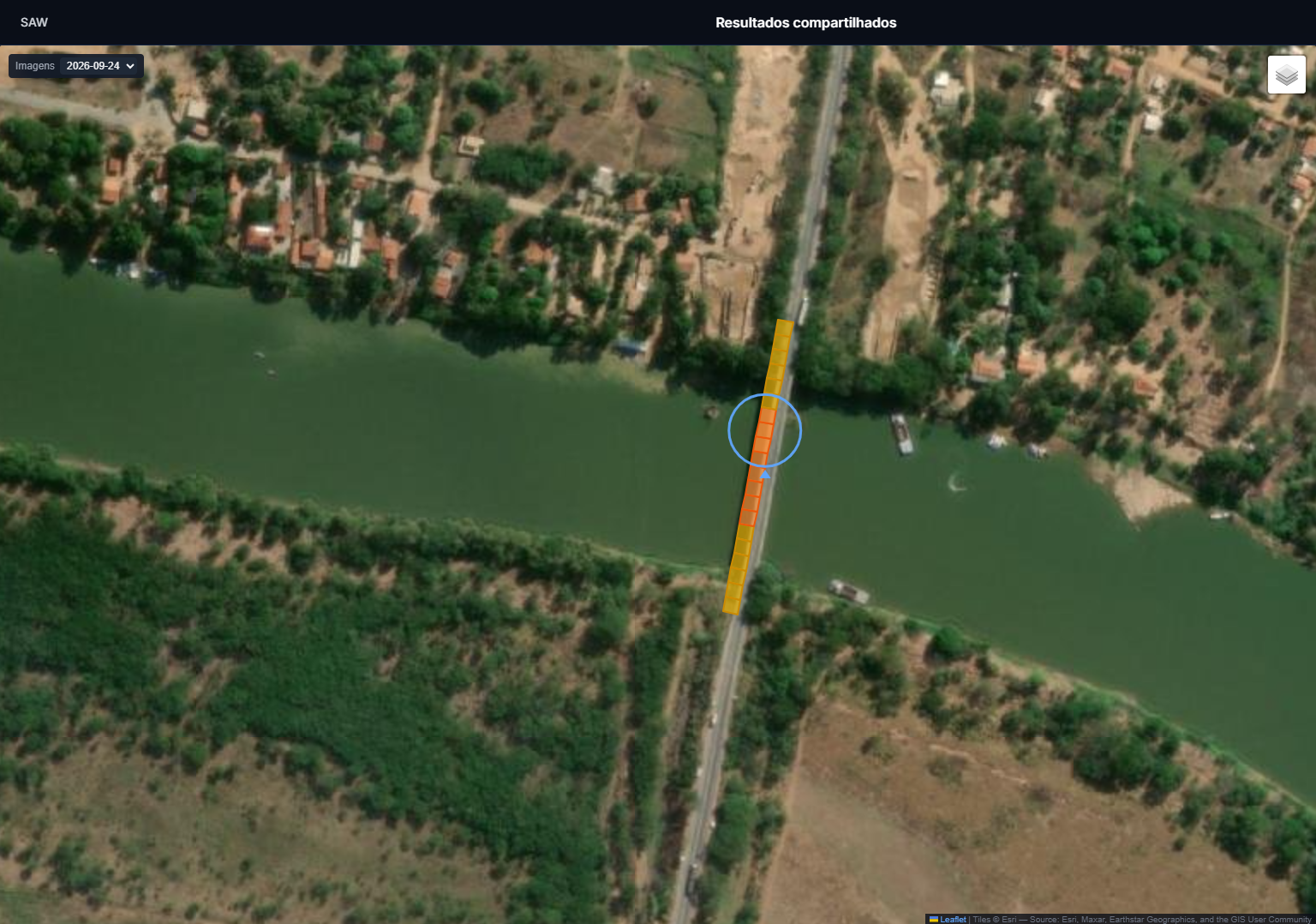
- InSAR monitoring histories integrated through SAW (Satellite Advanced Warning) to follow displacement trends over time.
- GPR
- Measurements incorporated at selected points to demonstrate the integration of information about the interior of concrete elements.
- Visual inspections
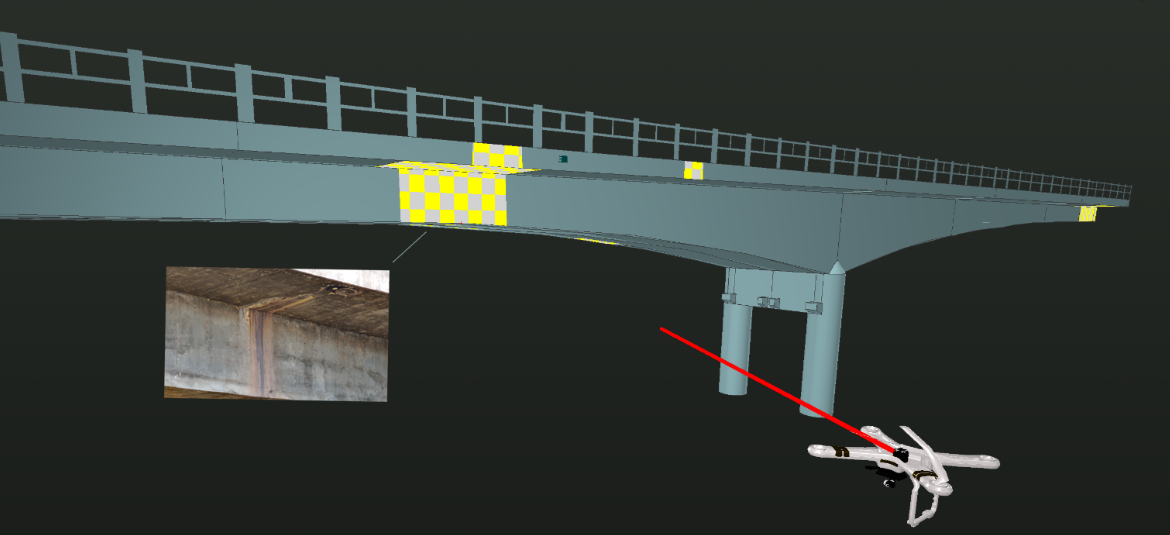
- Photographs collected by an operator-controlled drone in the field and subsequently incorporated into the Web Digital Twin.
- Structural sensors
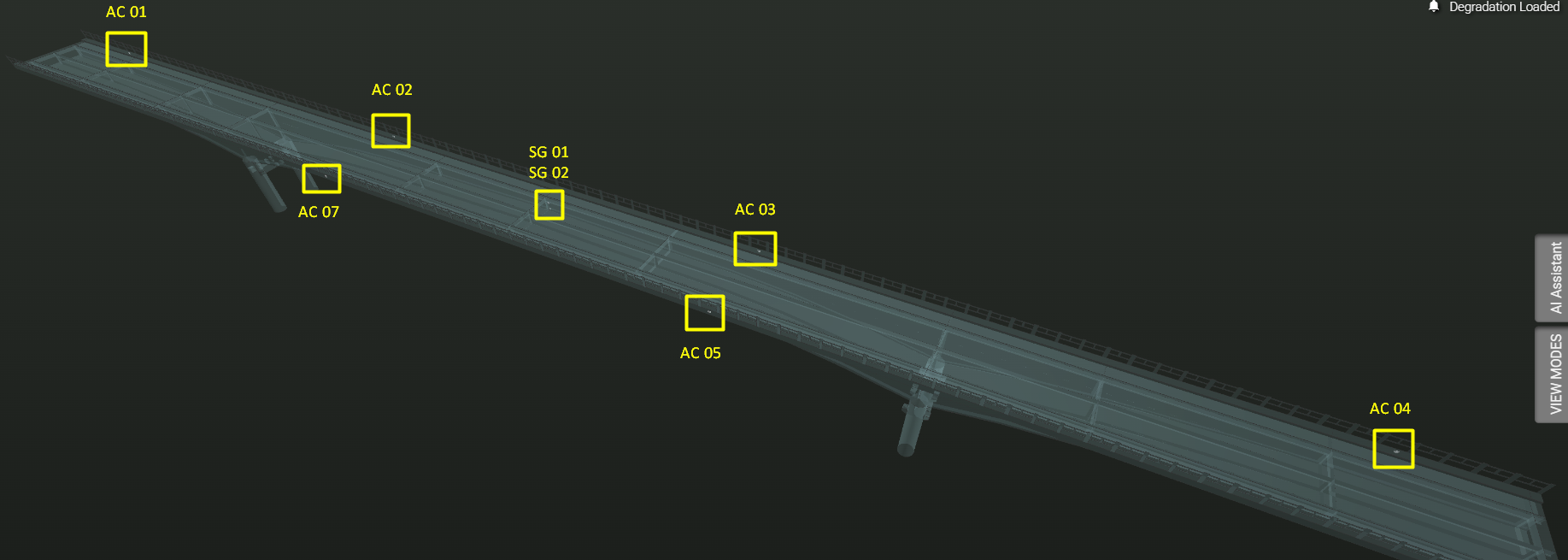
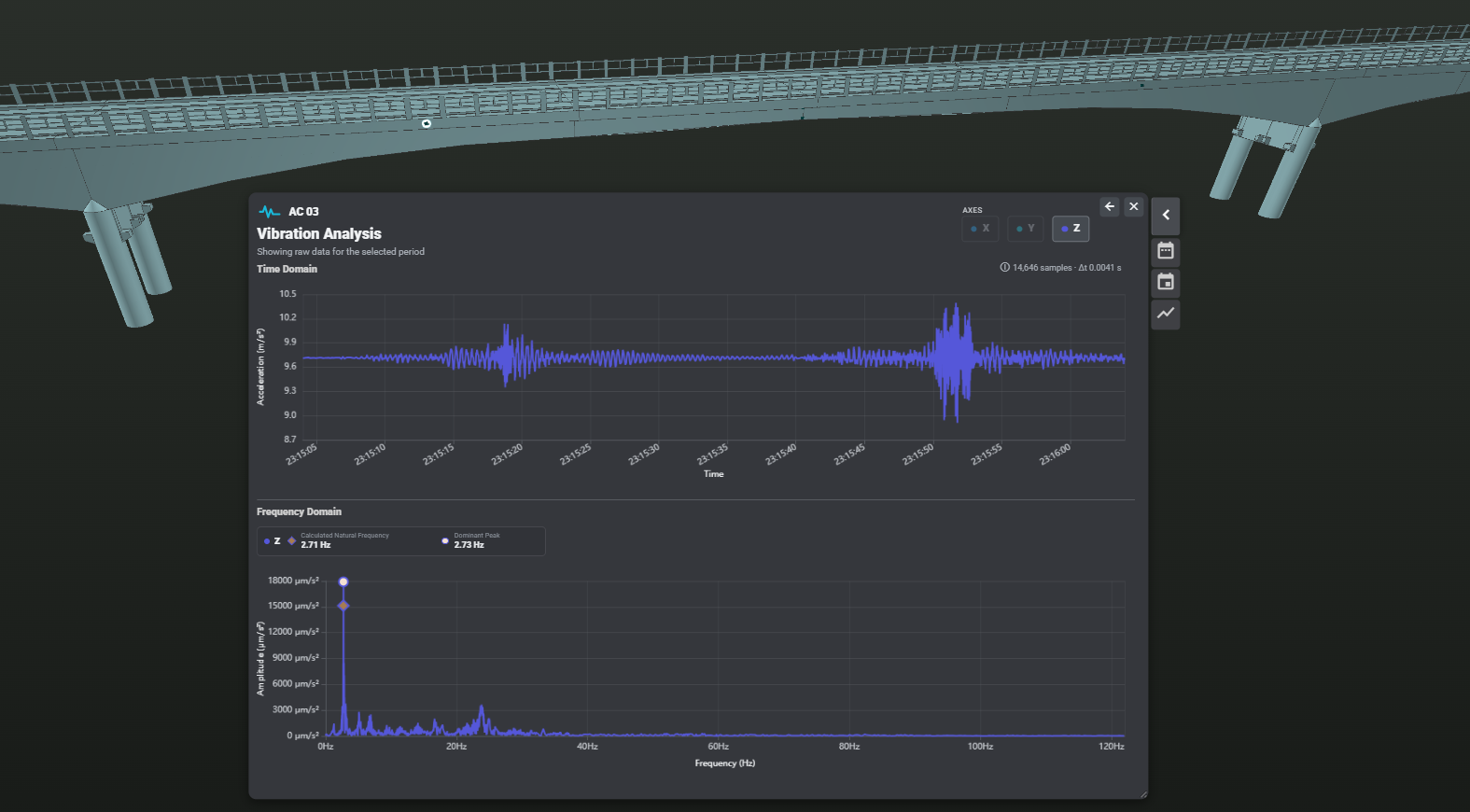
- Data from accelerometers and strain gauges linked to the instrumented regions for consultation and analysis of vibration and strain.
From monitoring the bridge to examining each element
The Web Digital Twin connected the asset view to local inspection and instrumentation evidence. This integration across scales made it possible to consult the history and relate complementary information in the 4D digital model, which includes the time dimension.
Photographs remained linked to inspection records, while measurements and monitoring data were organized in the context of the structure. The team gained a common information base for interpreting the data and following its evolution.
Configurable criteria to prioritize actions
The different evidence sources were related to a common risk assessment through criteria configured within the platform. For the data types covered by the pilot, this adaptation used configuration features already available in the Web Digital Twin.
Using these criteria, the solution demonstrated the automatic prescription of actions, such as directing inspections, increasing monitoring or requesting further assessments. The recommendations support the engineering team in setting priorities.
In the pilot, the rules and actions were configured for demonstration purposes, showing how the solution can be adapted to each organization’s management strategies.
Integration validated within the pilot scope
The pilot technically validated the integration of the four data sources in the Web Digital Twin and demonstrated their combined use to support risk assessment and action prescription. The result was a traceable information base connecting evidence, structural context and engineering recommendations.
The experience showed the potential of this approach to support more integrated, preventive management of bridges and other infrastructure structures. Expansion can be planned according to the available data, asset characteristics and each manager’s criteria.