
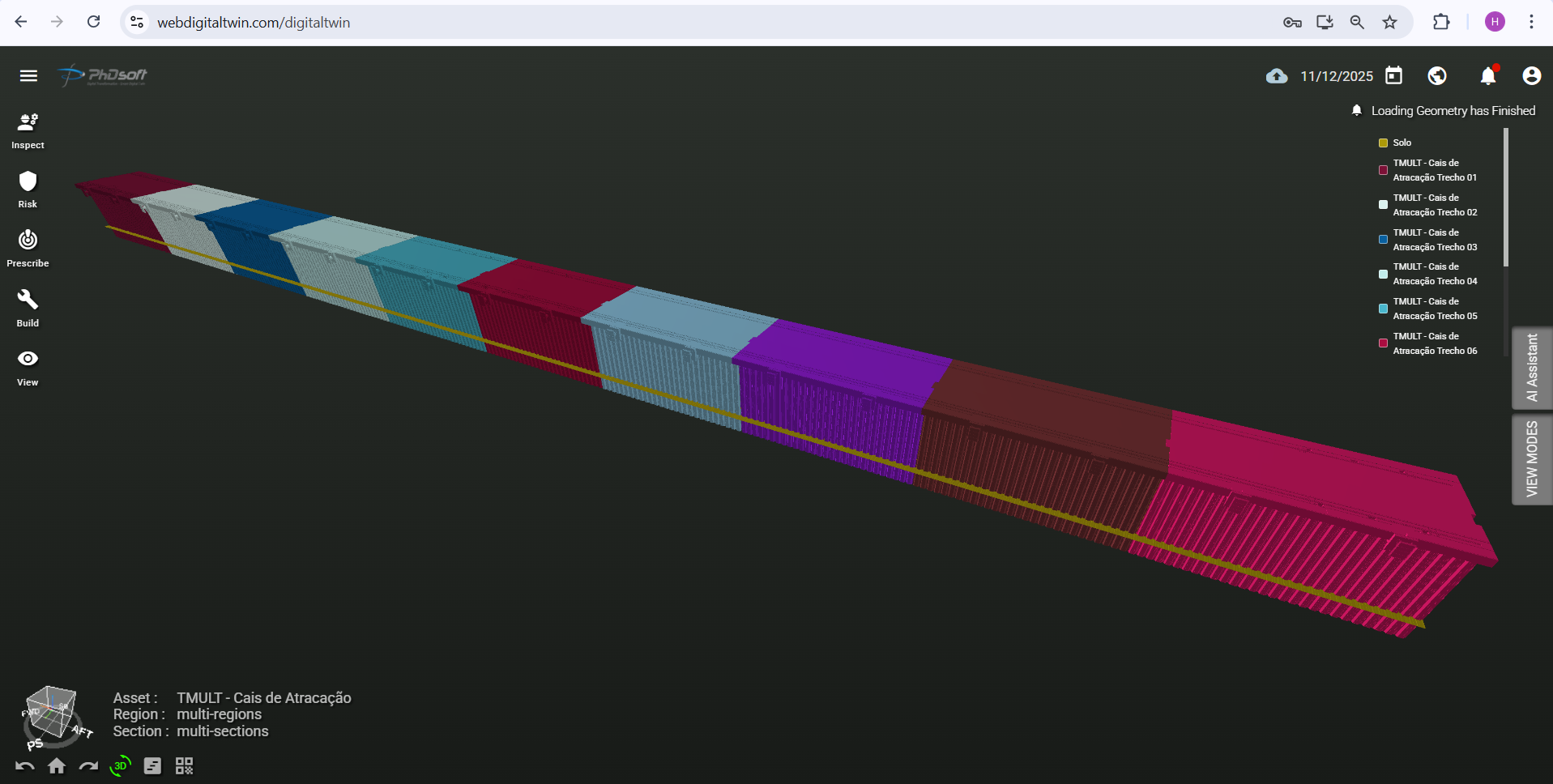
In partnership with Porto do Açu, through a research, development and innovation project funded by FINEP, PhDsoft applied Web Digital Twin to the management of real port assets. The platform brought together digital models, inspection histories, degradation analyses and sensor data in a single environment, creating a traceable foundation to support engineering and maintenance decisions.
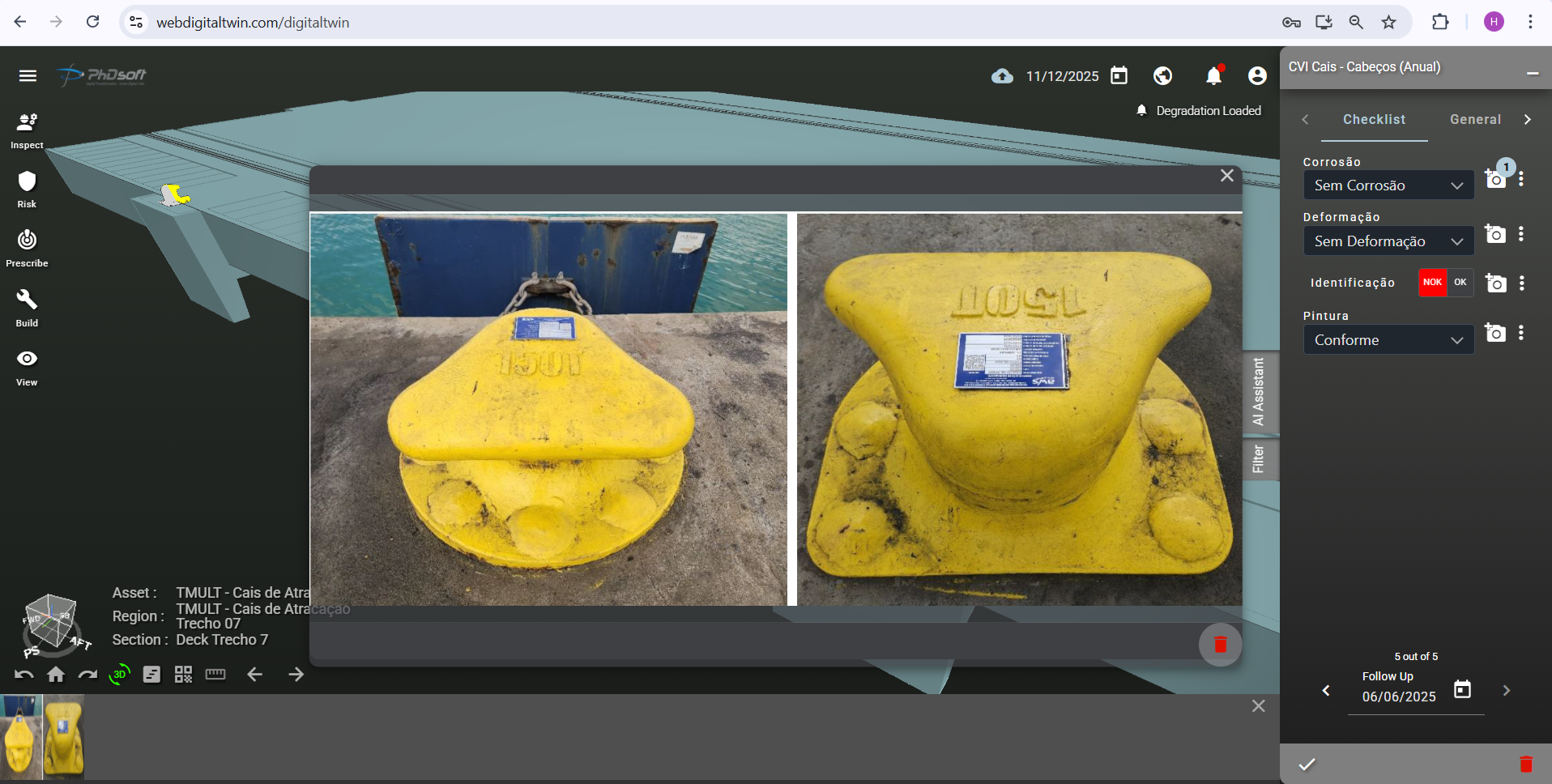
Each piece of evidence linked to the right element
Photographs, checklists and measurements are linked to the inspected component and the date of the record. Teams can locate evidence in the 3D model, review previous inspection campaigns and track how the asset evolves. The fourth dimension is time, connecting the history to condition analyses and future scenarios.
At the TMULT quay, ultrasonic thickness measurements of the steel quay wall from the 2023 and 2024 campaigns were incorporated, alongside visual inspections of mooring bollards and fenders with records dating back to 2021. The navigation buoy received visual inspection records for its above-water and submerged parts. At the Molhe Sul mooring bollards, inspections and photographs were also linked to the corresponding digital elements.
From history to analysis and recommendations
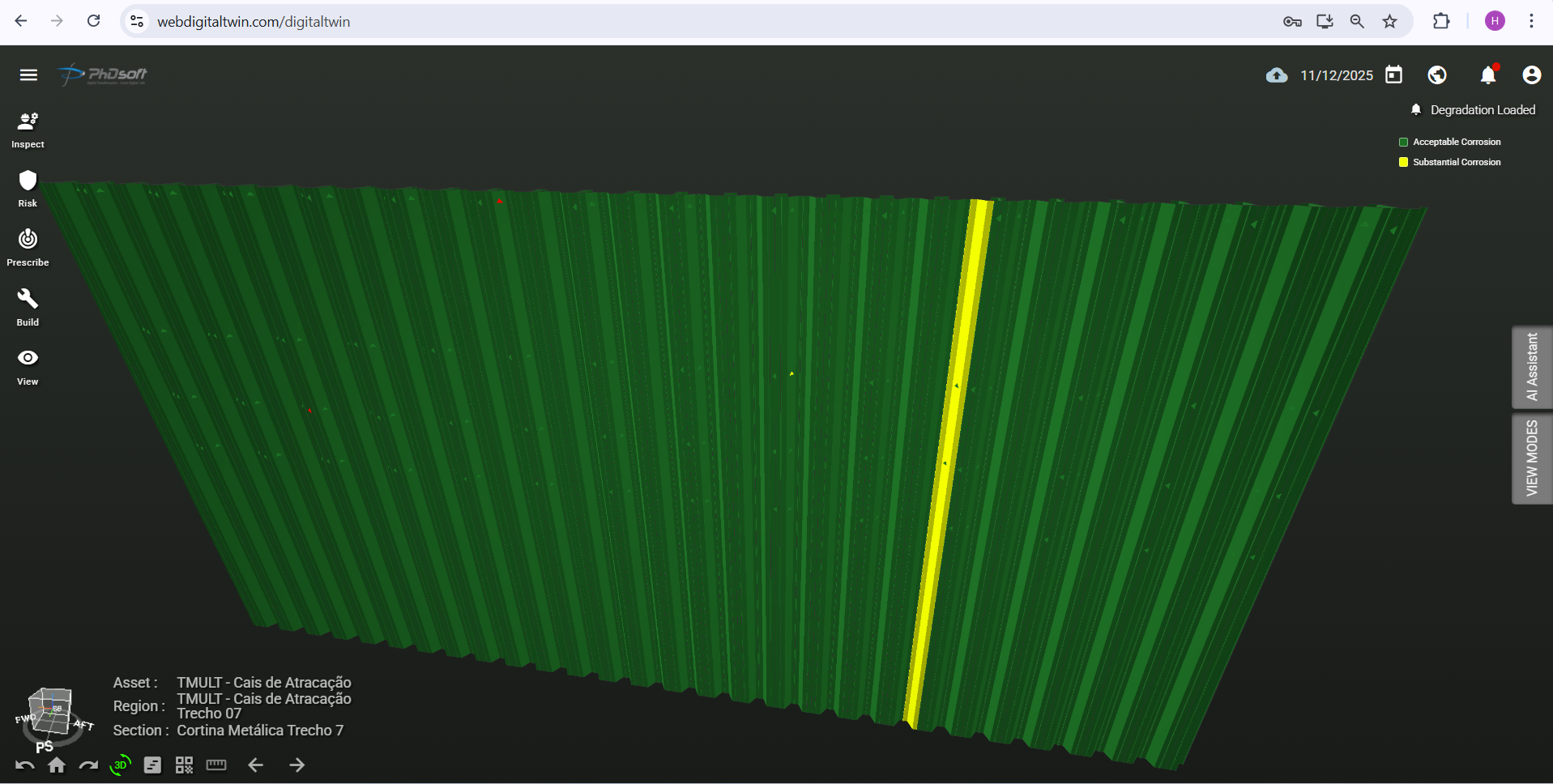
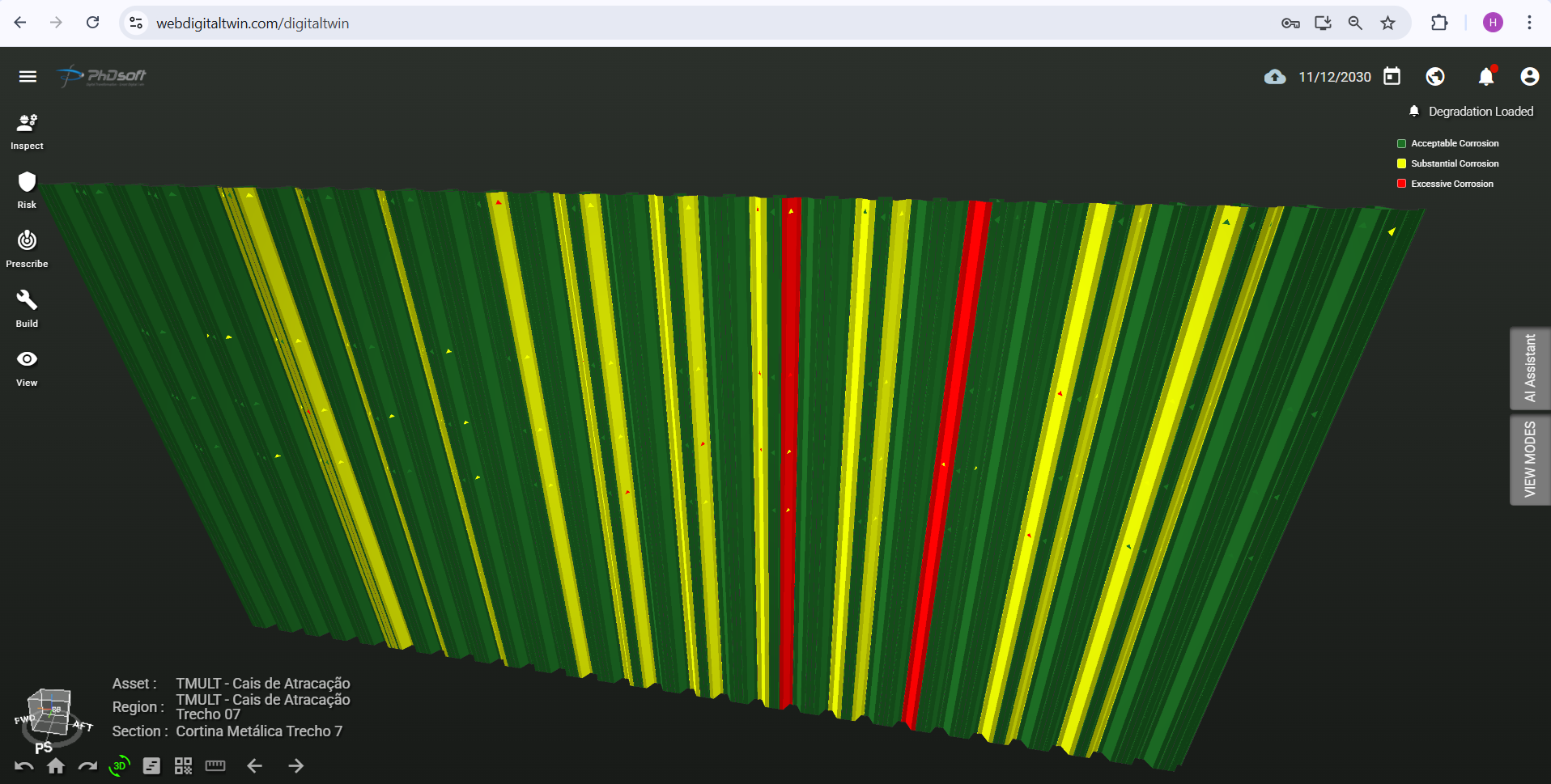
At TMULT, thickness measurements informed assessments of relative degradation, corrosion rate and estimated remaining life. The project presented scenarios for 2025 and 2030, supporting the targeting of future inspections and maintenance planning based on the available data and the engineering parameters adopted.
The RBA module for risk-based analysis and automation was also demonstrated. It applies configurable criteria to identify priority areas and automatically prescribe monitoring, inspection or repair actions. In the project, this capability was presented through a demonstration scenario. The recommendations support assessment and decision-making by engineering teams.
Degradation visualized over time
The colors represent relative degradation ranges based on the criteria adopted in the project. The prospective 2030 scenario depends on the available measurements and calculation parameters and should be interpreted as support for inspection and maintenance planning.
2025 scenario
Prospective 2030 scenario
The hopper connects operations and the digital model
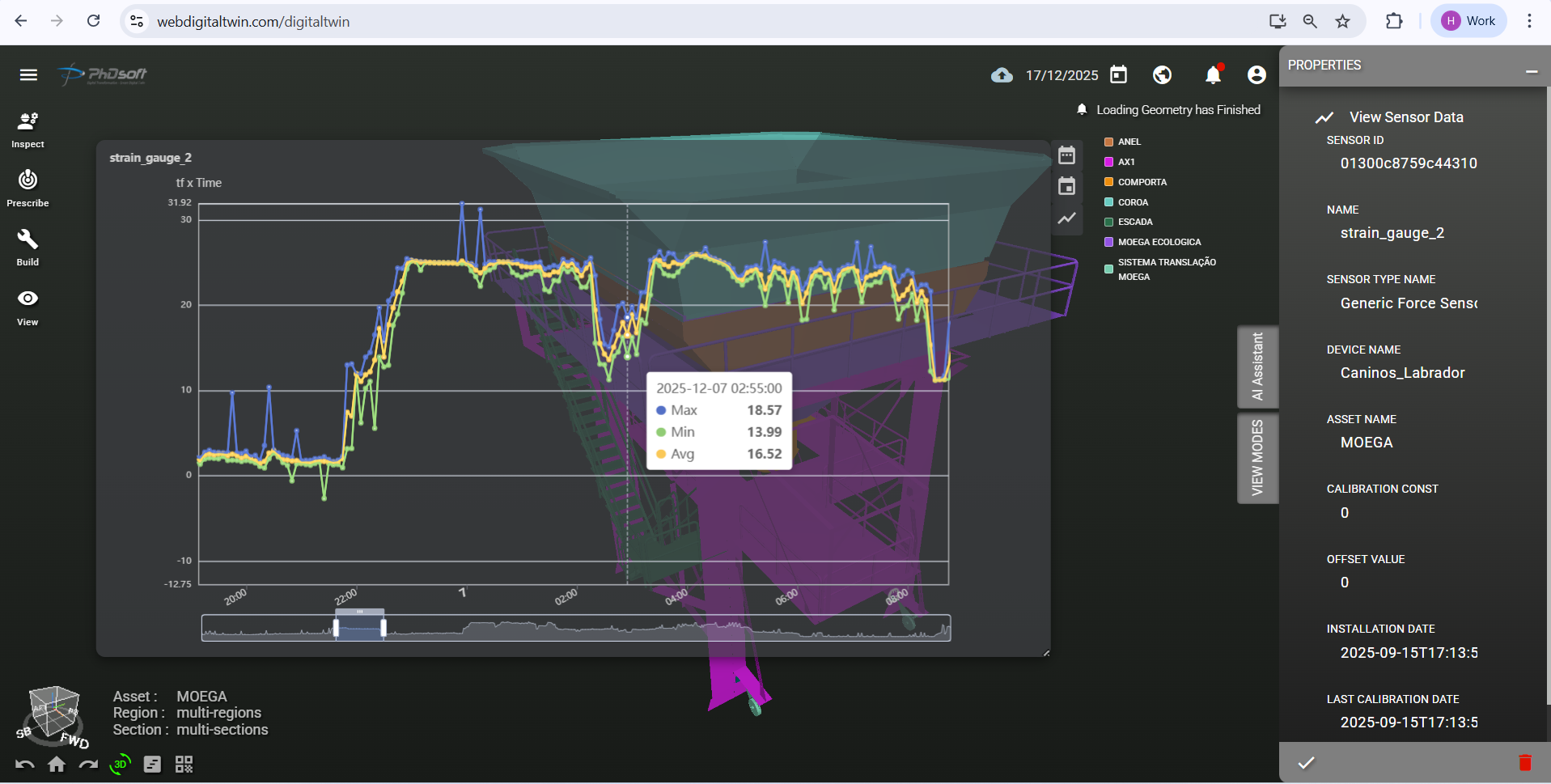
At the hopper, deformation sensors known as strain gauges were connected to data acquisition, transmission to the cloud and Web Digital Twin. The integration enabled access to historical series and visualization of estimated loads during operations in near real time. The project validated a functional prototype, whose accuracy can be improved through industrial sensors and dedicated calibration.
A foundation for broader port asset management
The result was greater information traceability, better context for decisions and less effort to consolidate data, with evidence accessible for review and technical audits. The foundation developed allows expansion to other port assets, including cranes, to be planned, and drone inspections to be incorporated according to the needs of each application.