
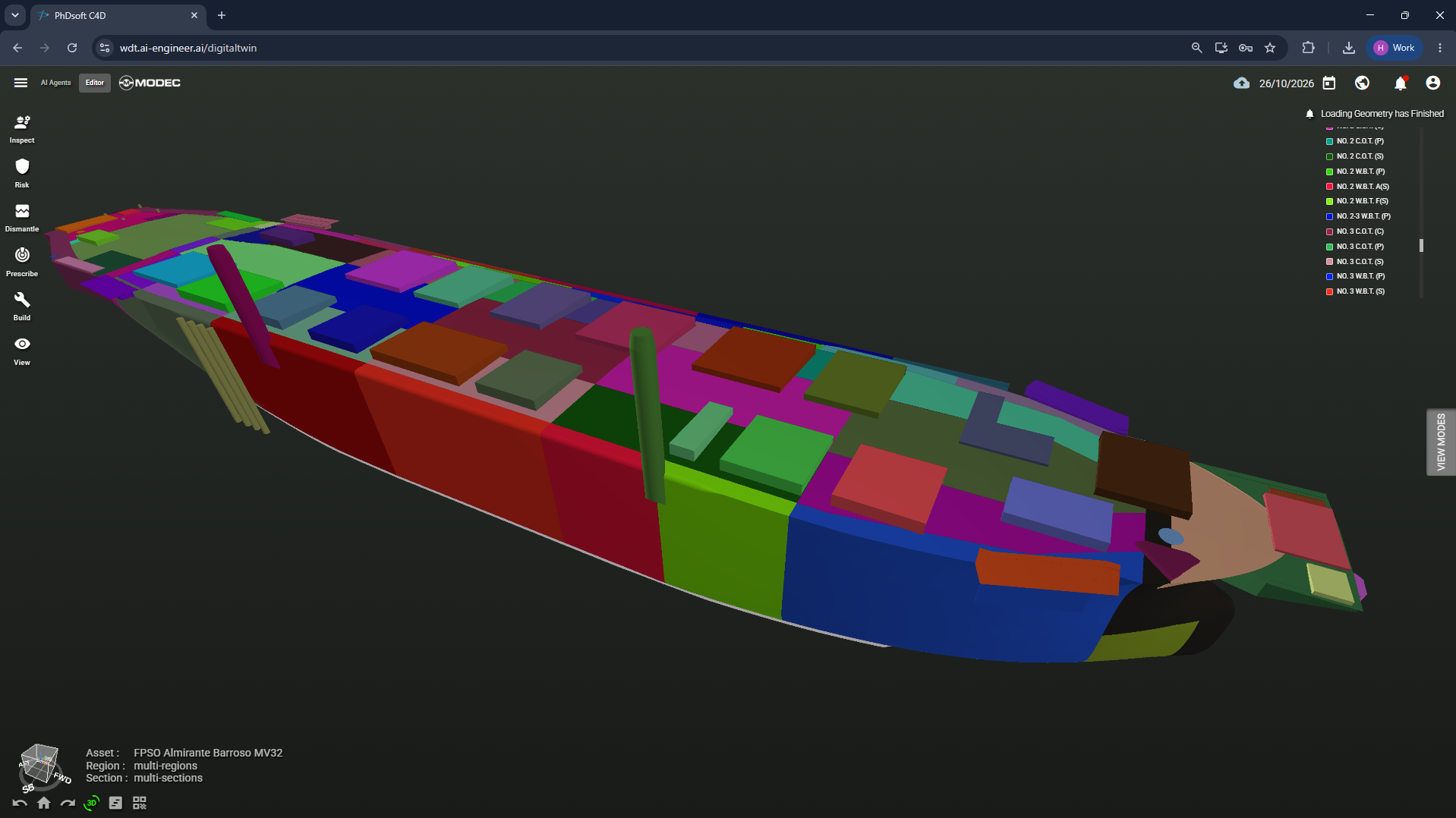
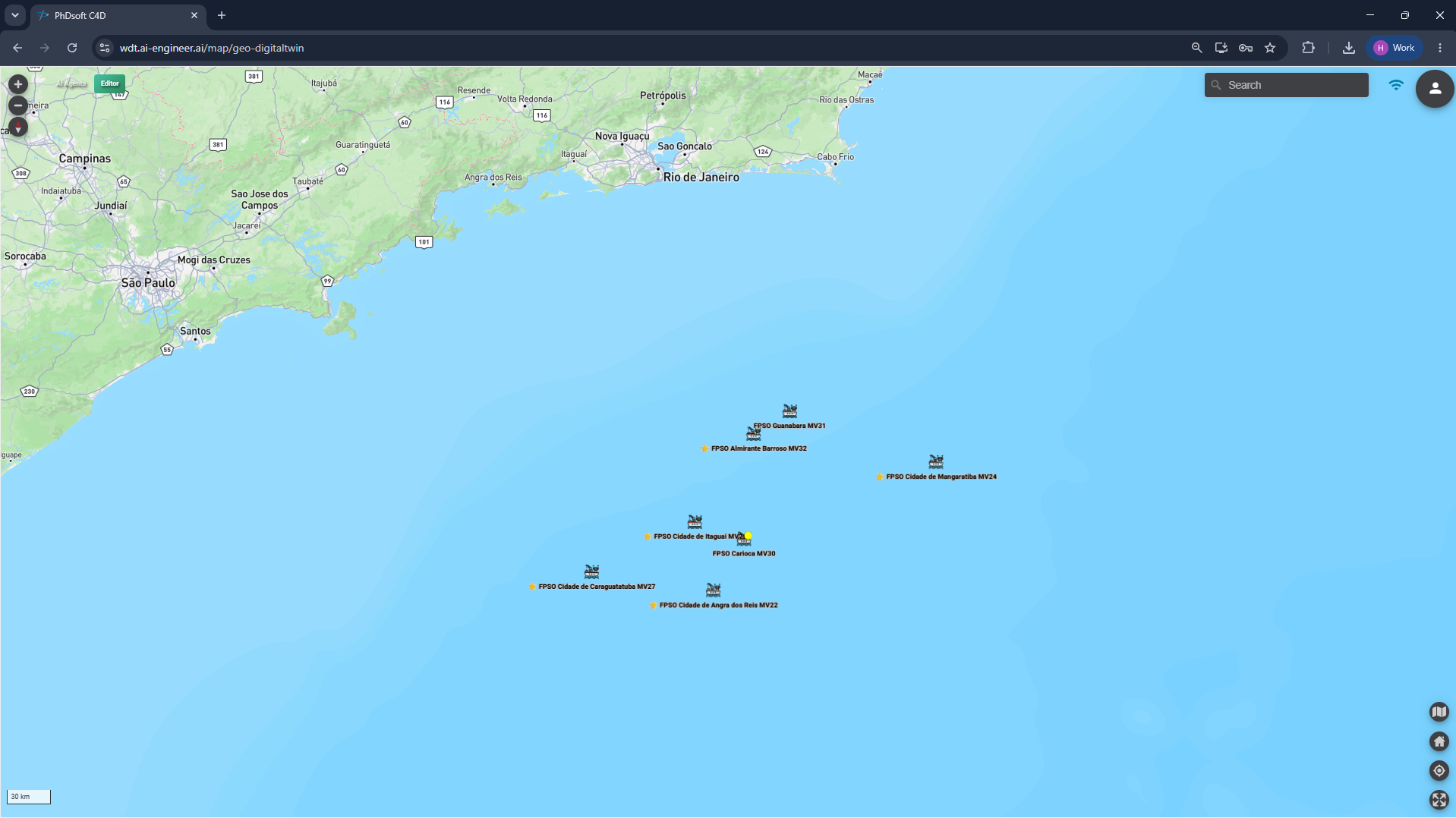
MODEC Brazil uses PhDsoft's Web Digital Twin to manage structural integrity across units MV22, MV24, MV26, MV27, MV30, MV31 and MV32. The application brings inspection planning, field records, degradation assessment and model change management into a shared information base that follows each structure over time.
Units covered
- MV22
- MV24
- MV26
- MV27
- MV30
- MV31
- MV32
Plan in the model and take the inspection package into the field
The challenge is to keep inspection scope, field records and the corresponding structural elements connected. When drawings, notes and spreadsheets are separate, rebuilding that context requires additional work in every campaign.
Web Digital Twin automatically generates an inspection plan from the model, which the team can adjust. The exported package combines 2D section drawings and tables to complete, providing an organized guide for inspection execution.
Bring each piece of evidence back to the asset
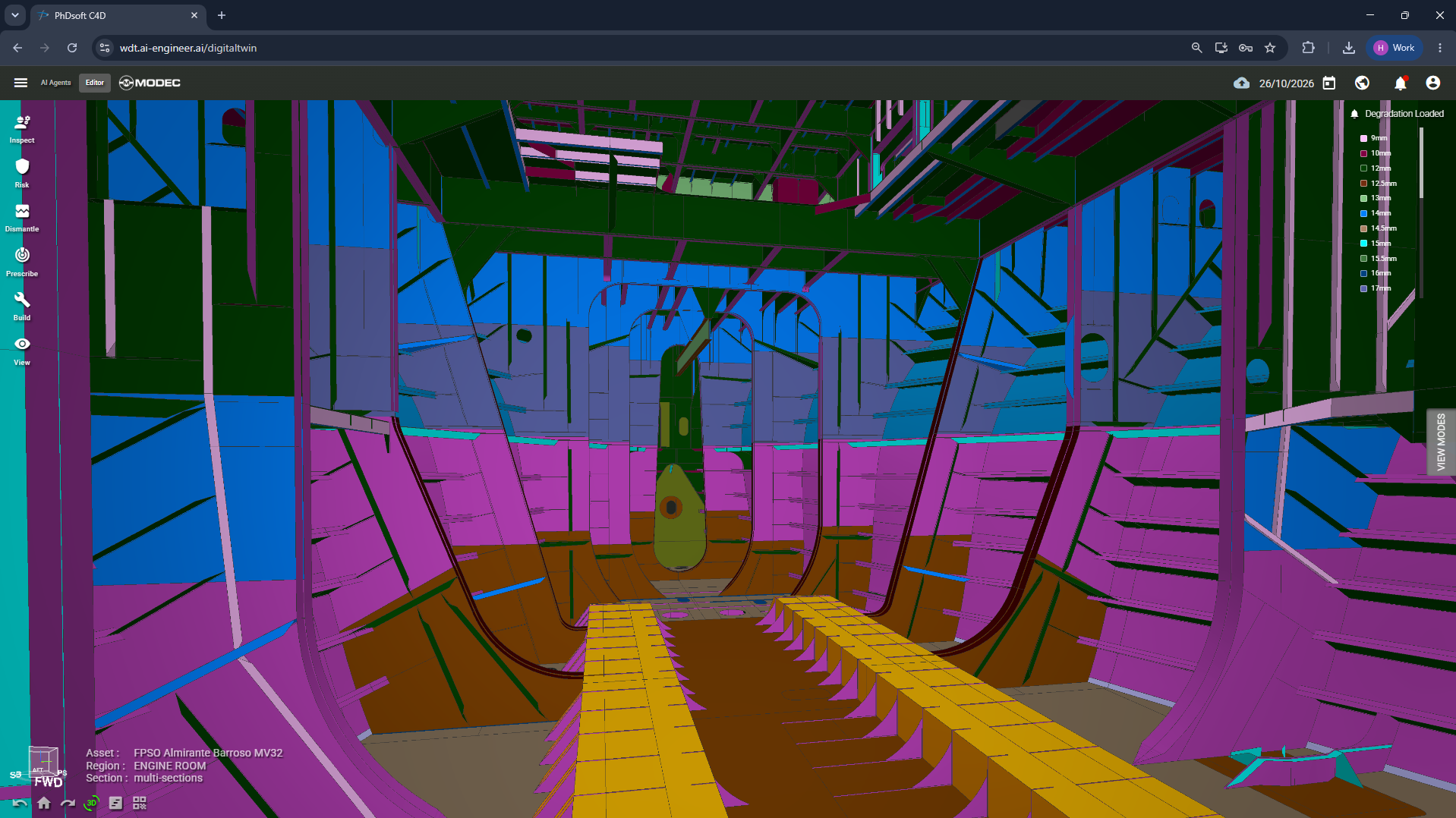
The team records information in the field and consolidates the spreadsheet in the office before importing it into Web Digital Twin. Once imported, records are associated with the corresponding model elements, allowing results to be reviewed in the context of the asset.
This workflow connects spreadsheet-based inspection routines to management with historical and spatial context. Collected information becomes part of an engineering information base linked to the structure and inspection campaign.
Assess corrosion using the structure's history
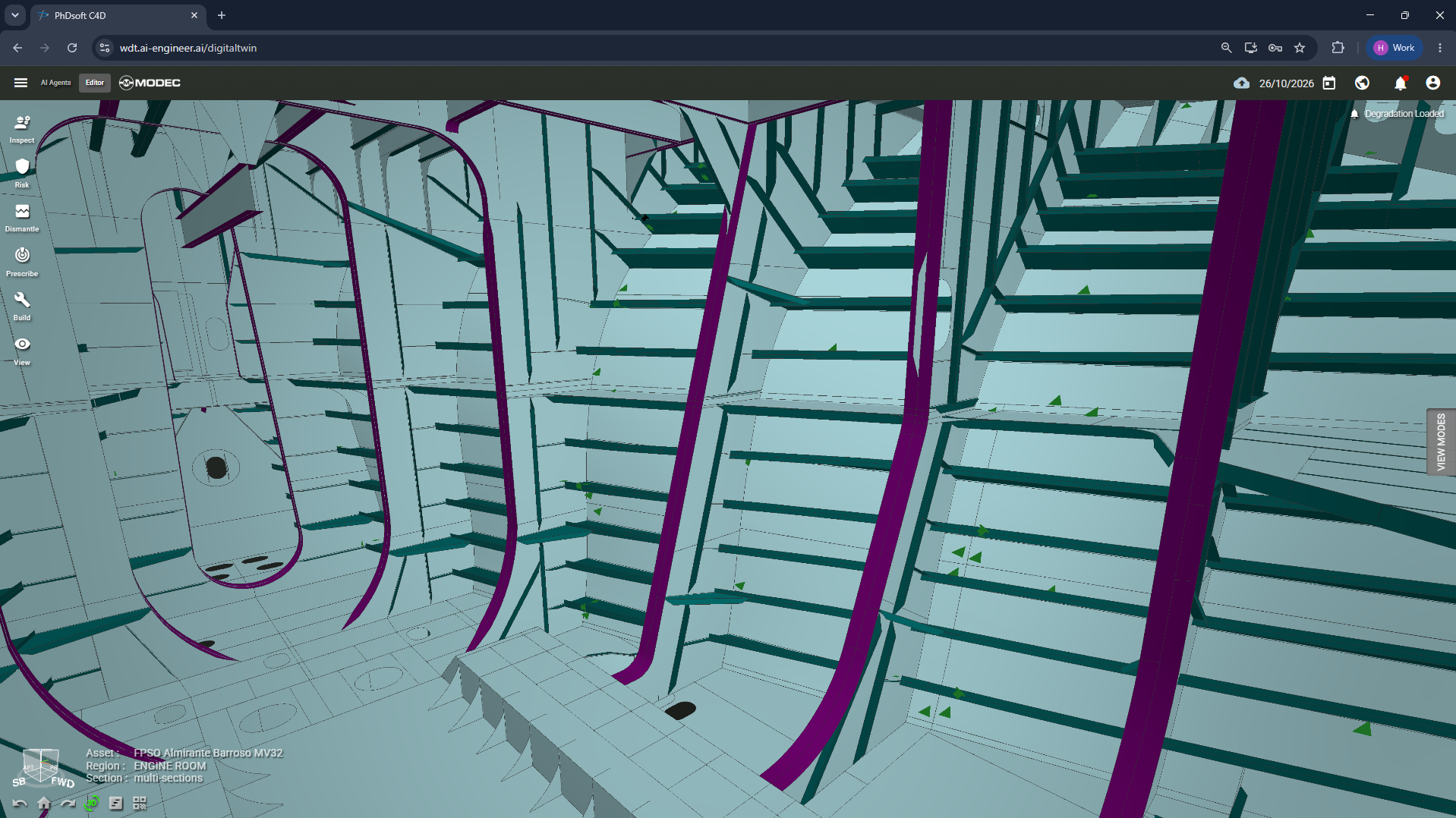
Structural element metadata, organized from the drawings, is brought together with inspection records. The degradation module supports assessment of thickness loss and excessive corrosion, based on available data and the engineering criteria adopted.
The history also supports projections of how structural condition may develop. This perspective helps schedule further inspections and anticipate maintenance needs, with decisions informed by the records of each unit.
Keep the digital twin aligned with the actual structure
During construction, conversion and operation, characteristics found in the field can differ from those represented in structural drawings. MODEC uses Web Digital Twin capabilities to adjust element properties, such as those of a plate, and modify geometry to represent the actual configuration.
Changes can be tracked over time, connecting model evolution to the asset's history. This change management keeps the digital twin useful for subsequent inspections and integrity assessments.
Simulate corrosion according to tank service cycles
MODEC also uses corrosion scenarios based on service cycles through the Load Cycle Corrosion capability. Corrosion rates based on rules and engineering criteria can be assigned to the periods considered in a simulation, complementing degradation assessment.
This approach allows the team to compare compartment service conditions, such as produced water, oil, ballast or void tank service, according to scenarios applicable to each unit. Engineers can assess estimated corrosion development over the next cycle and whether an earlier intervention should be considered. Results support engineering decisions about inspection and maintenance.
Value comes from continuity of information
In MODEC's current application, inspection plans, field records, model configuration and degradation scenarios remain connected to the same asset. This continuity provides traceability and context for prioritizing preventive, predictive or corrective maintenance.
The case demonstrates the digital twin's role as a living structural integrity information base: it follows inspection information, incorporates changes verified in the field and supports planning interventions at the appropriate time.
Extending into advanced analysis
As an extension of the application, finite element analysis for stress, buckling and fatigue, together with automation of risk-based maintenance actions, is under evaluation or in the early stages of adoption at MODEC. This work aims to extend the use of inspection and degradation information in engineering assessments and intervention prioritization.
Talk to PhDsoft about structural integrity for your offshore assets.