
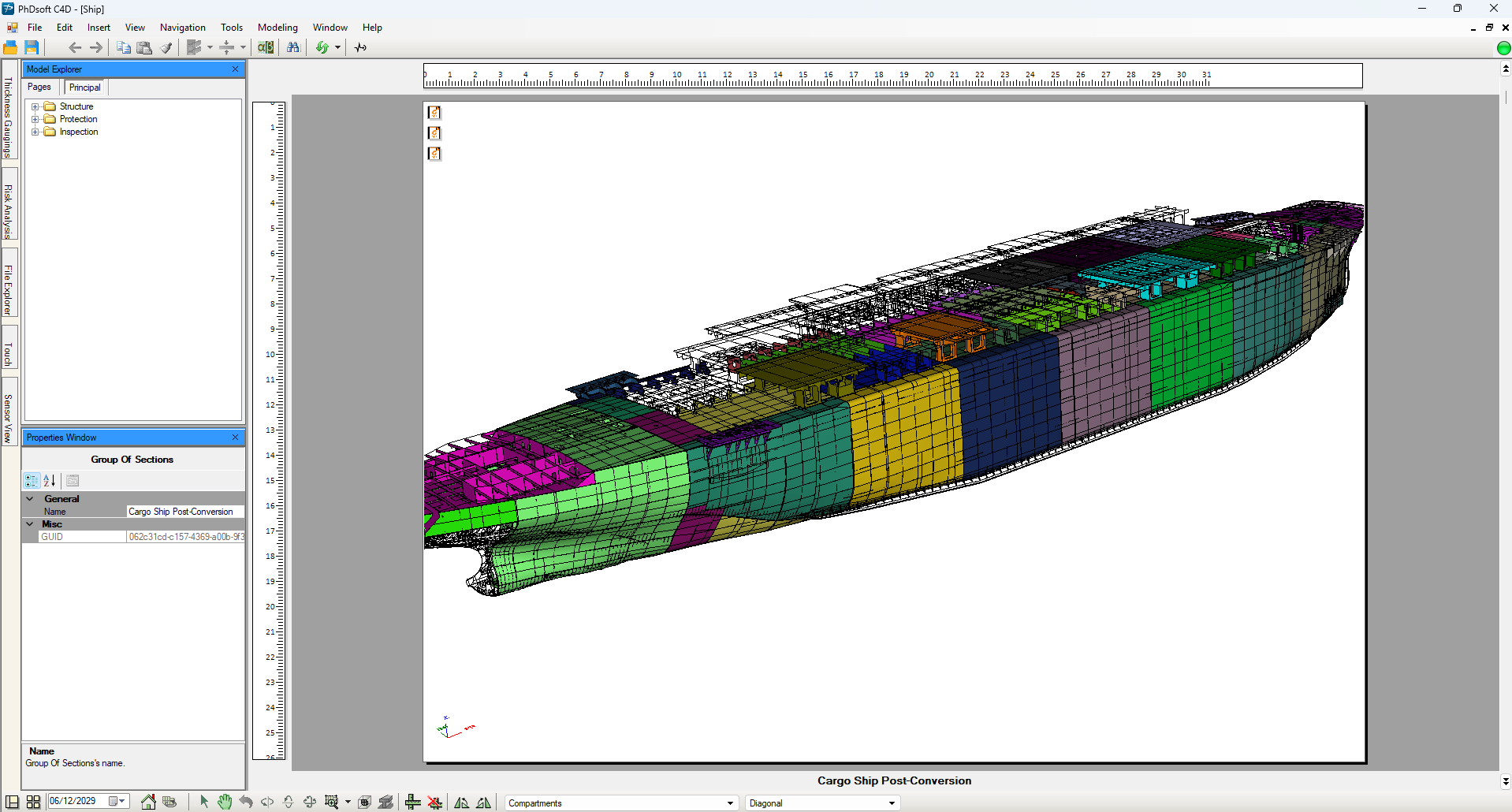
Adoption of PhD C4D in this fleet began in 1995 at Fronape/Petrobras and continued at Transpetro until 2014. At Transpetro, the solution covered the entire fleet of ships, bringing inspection histories, degradation assessment and repair information together in an integrated structural integrity management information base.
Transpetro in the evolution of PhDsoft
Transpetro played a central part in the history of PhDsoft. Its fleet used the second and third generations of PhD C4D, marking the application of the technology to marine structural integrity management.
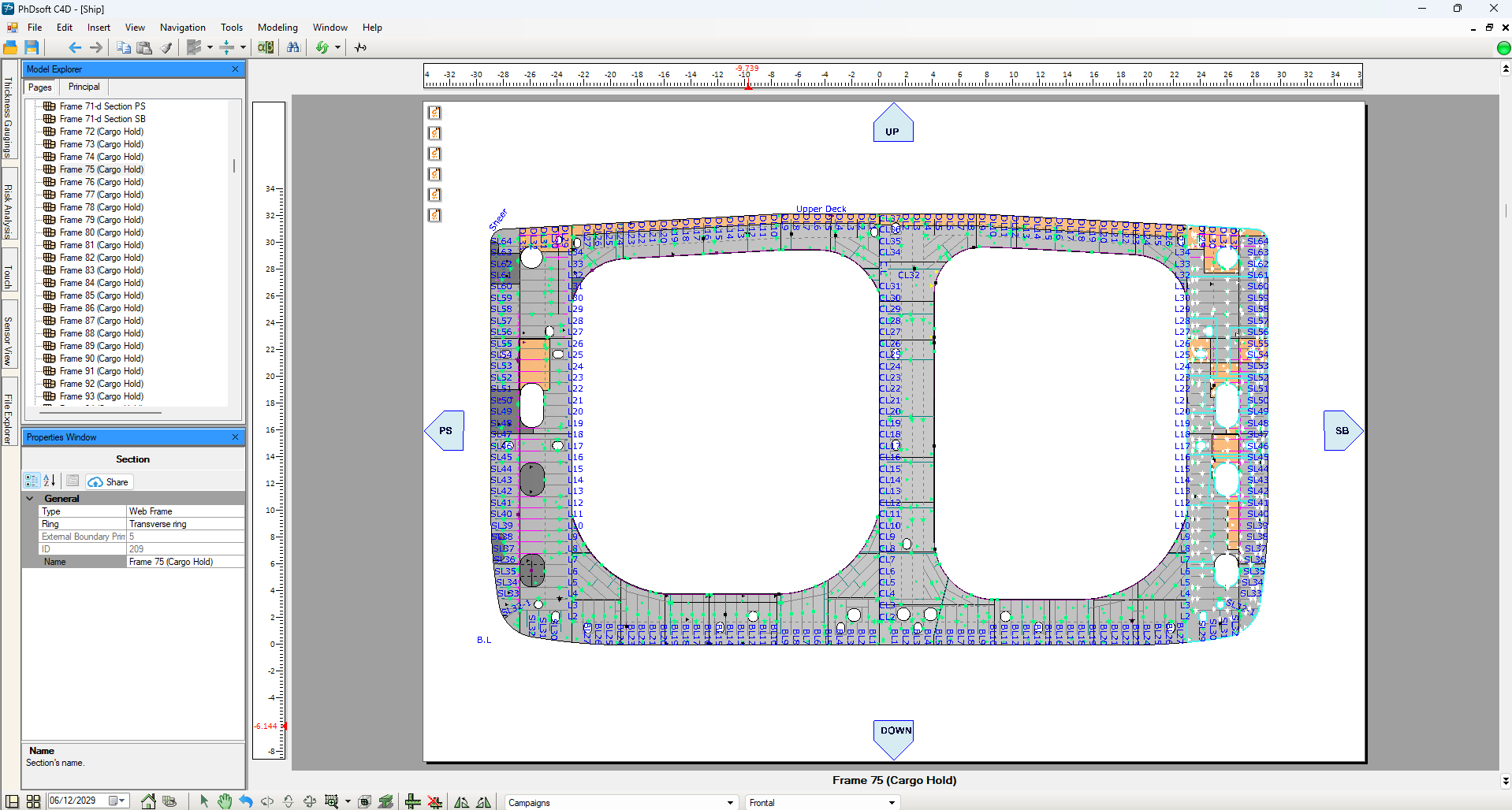
The second generation of PhD C4D operated in Windows 2D. The third generation represented the asset as a 3D model in a desktop application. Transpetro used both generations during the historical period described in this case.
In 2021, the fourth generation marked the evolution to Web Digital Twin. The capabilities and experience developed in PhD C4D were carried forward and expanded in the fully web-based platform, continuing the technological development that began with the desktop versions.
Inspection histories as a foundation for management
Inspection records provided a reference for tracking the ships' structural condition over time. Bringing these histories together in the solution allowed engineers to review each asset's information and relate it to fleet monitoring needs.
This organization supported the combined review of inspections and preparation of integrity assessments, keeping records available for engineering work.
Degradation and repairs in the same information base
The degradation module complemented inspection histories in assessing ship condition. Repair information was also part of the solution, connecting structural monitoring to the interventions required.
With these capabilities brought together, management could consider inspection records, degradation trends and repairs when planning maintenance. The integration provided a more consistent view of priorities for individual assets and the fleet.
One engineer coordinating around 50 ships
In the historical application reported by PhDsoft, the integration of the PhD C4D modules enabled one engineer to centralize the coordination of structural integrity management for around 50 ships.
This result concerns coordination and consolidation of the fleet's engineering information. The integrated information base provided the context needed to follow assets, review their histories and organize inspection and maintenance priorities.
Historical experience and renewed discussions
The period of PhD C4D use described in this case ended in 2014. The fleet application represents a central chapter in the history of PhDsoft and in the technical relationship built with the organization.
Today, Web Digital Twin extends that history with browser access and tablet use, including online and offline operation. PhD C4D capabilities have evolved and been extended with new features to connect fieldwork with engineering information management.
PhDsoft is reestablishing contact with Transpetro to explore opportunities for a new partnership. This activity is at the discussion stage and draws on the history of collaboration and the solution's development over the years.
Talk to PhDsoft about integrated structural integrity management for your fleet.